
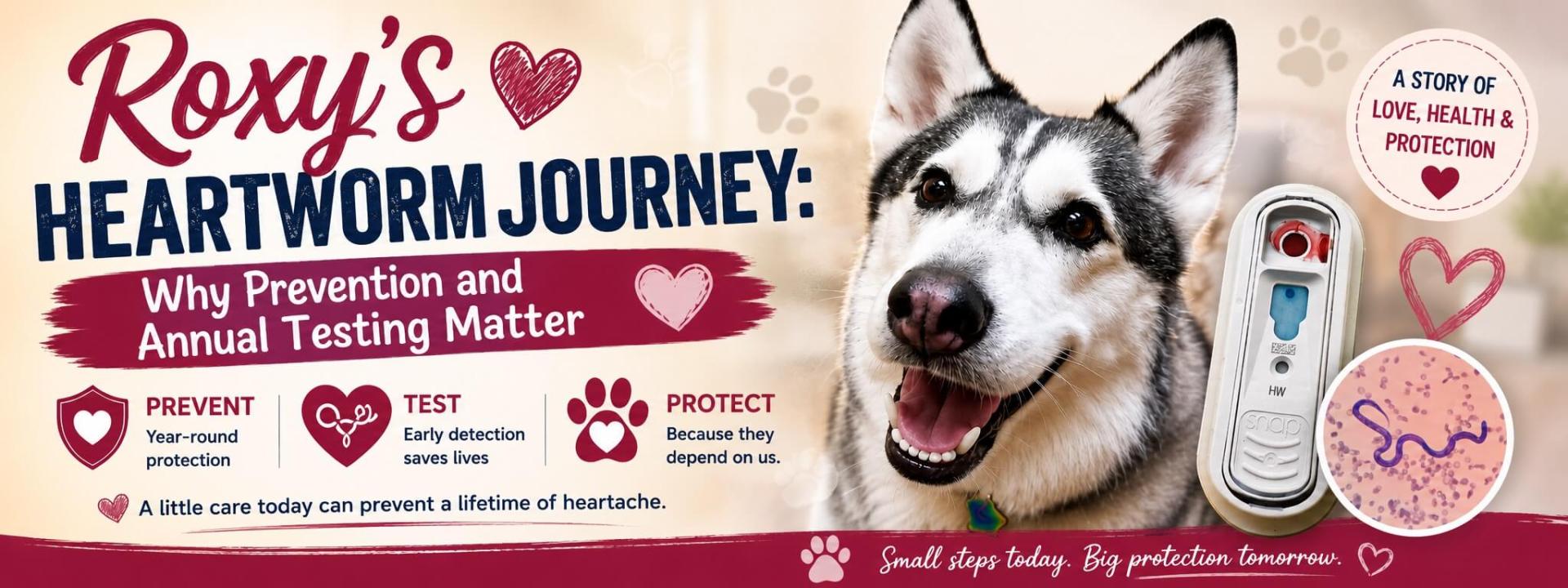

When Roxy first visited Belton Veterinary Clinic in July 2025, she appeared to be a healthy young Husky who was just adopted from the local shelter. She was bright, active, eating normally, and showed no coughing or difficulty breathing. Her heart and lungs sounded normal during her examination.
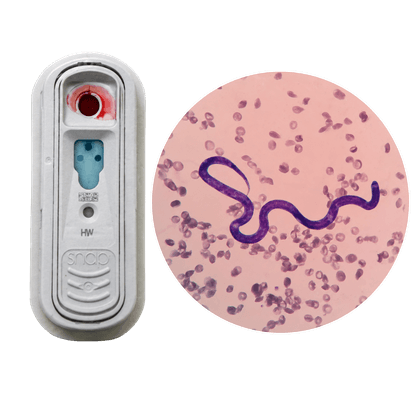
However, Roxy’s routine heartworm screening test was strongly positive. A follow-up blood test confirmed that microfilariae the microscopic offspring of adult heartworms were circulating in her bloodstream. Roxy’s case is an important reminder that a dog can have heartworm disease without showing obvious symptoms.
What Are Heartworms and how are they Spread and What Damage Can They Cause?
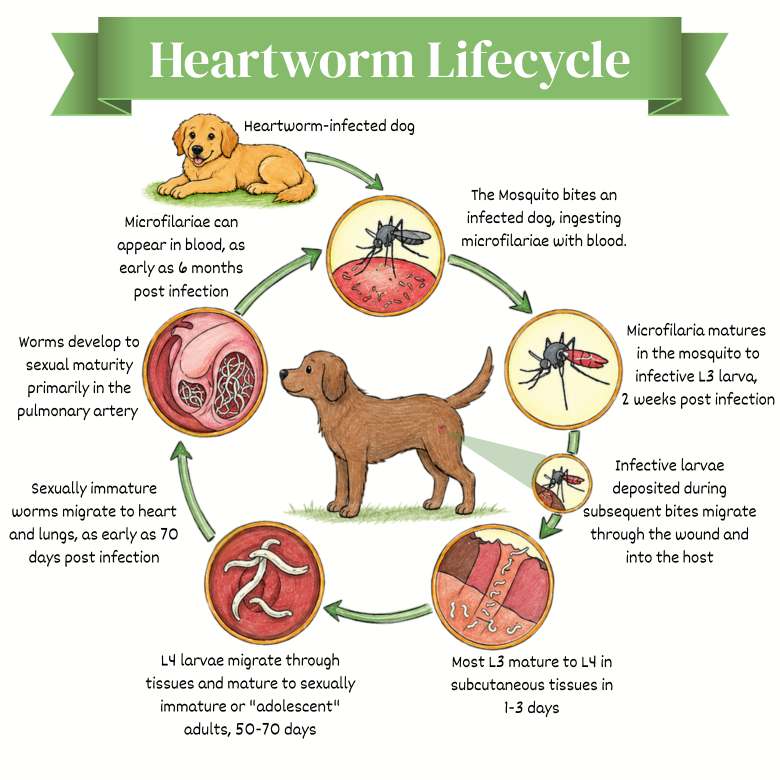
Heartworms are spread through the bite of an infected mosquito. They are not transmitted directly from one pet to another through contact, shared water bowls, coughing, or playing together.
When a mosquito bites an infected dog, coyote, fox, or other carrier, it can pick up microscopic immature heartworms called microfilariae. These larvae develop inside the mosquito. When that mosquito later bites another dog or cat, the infective larvae enter through the bite wound and begin developing inside their new host. It takes approximately six months for heartworms to mature, and adult worms can survive for years.
The Effects of Heartworms in Dogs
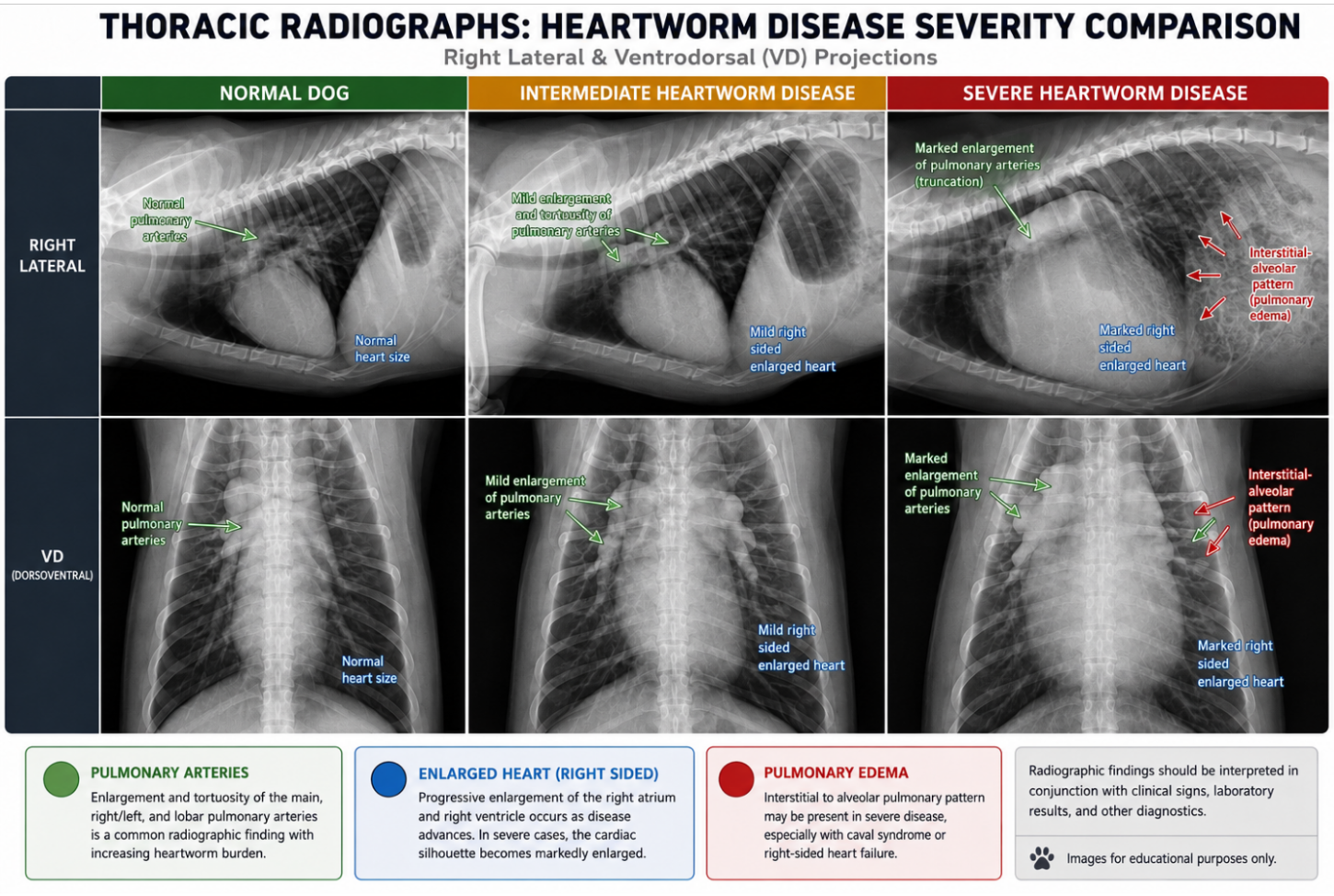
Dogs are the natural host for heartworms, meaning the worms can mature, reproduce, and increase in number inside the dog. Adult heartworms primarily live in the pulmonary arteries—the large blood vessels carrying blood from the heart to the lungs—and may also extend into the heart itself.
As the worms grow, they cause inflammation and permanent damage to the lungs and blood vessels. This makes it harder for the heart to pump blood through the lungs. Early in the infection, a dog may appear completely normal. As the disease progresses, signs may include:
- A persistent cough
- Tiring easily or avoiding exercise
- Difficulty breathing
- Decreased appetite and weight loss
- Fluid accumulation in the abdomen
- Heart failure
Dogs with severe infections can develop caval syndrome, in which a mass of worms interferes with blood flow through the heart. This can cause sudden weakness, pale gums, breathing difficulty, dark urine, cardiovascular collapse, and death without emergency treatment. Even after the worms have been eliminated, some dogs may be left with lasting damage to their heart, lungs, and pulmonary arteries.
Heartworms Affect Cats Differently
Cats can also become infected through mosquito bites—even cats that live entirely indoors. Cats are not the heartworm’s preferred host, so they usually have fewer worms than infected dogs. Unfortunately, this does not mean the disease is harmless. In a cat’s smaller cardiovascular system, even one or two worms can cause severe illness.
Immature heartworms can trigger intense inflammation in the lungs, producing a condition called heartworm-associated respiratory disease, or HARD. Affected cats may develop coughing, wheezing, asthma-like attacks, rapid or difficult breathing, vomiting, decreased appetite, lethargy, or weight loss. In some cats, the first noticeable sign may be sudden collapse or death.
Diagnosing heartworm disease in cats can also be difficult because they may have only a small number of worms, and standard heartworm tests do not identify every feline infection. Unlike dogs, cats cannot safely receive the medication used to kill adult heartworms. Treatment is generally limited to monitoring and supportive care for the inflammation and respiratory complications caused by the infection. For cats, prevention is therefore especially important.
Because mosquitoes can enter homes, both indoor and outdoor pets are at risk. Consistent, year-round heartworm prevention is the safest way to protect dogs and cats from this potentially life-threatening disease.
Beginning Roxy’s Treatment
Heartworm treatment is much more involved than simply giving a deworming medication. Adult heartworms live primarily in the blood vessels of the lungs, where they can cause progressive damage even before a dog begins coughing or tiring easily.
Roxy began a carefully planned treatment protocol. Her initial medications included:
- Doxycycline to reduce complications associated with heartworm infection and treatment
- Monthly heartworm prevention to prevent new infections
- Anti-inflammatory medication as needed during different stages of treatment
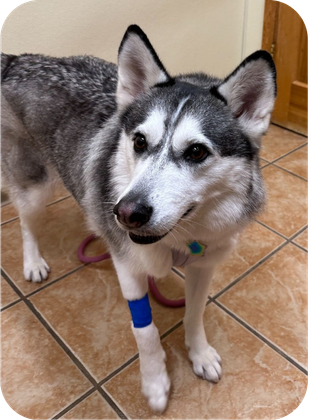
After completing her initial medications and waiting period, Roxy returned for bloodwork, chest radiographs, and the first of three Diroban (melarsomine) injections—the medication used to kill adult heartworms. One month later, she received her second and third injections approximately 24 hours apart. She was also prescribed a tapering course of prednisone to help control inflammation.
The Challenging Part: Keeping Roxy Rested
One of the most important—and often most difficult—parts of heartworm treatment is strict activity restriction.
As adult heartworms die, fragments of the worms travel into the small blood vessels of the lungs. Running, playing, and other strenuous activity can increase blood flow through the lungs and raise the risk of serious complications. For this reason, Roxy needed to remain calm, stay confined, and go outside only for controlled leash walks throughout treatment and recovery.
Fortunately, Roxy handled her treatment well. Our team monitored her closely during each hospital stay, and her family did an excellent job following her medication and exercise-restriction instructions at home.
The Results We Were Hoping For
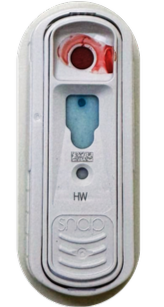
One month after completing her adult heartworm injections, Roxy returned for a blood draw for a microfilaria test that showed no parasites in her bloodstream.
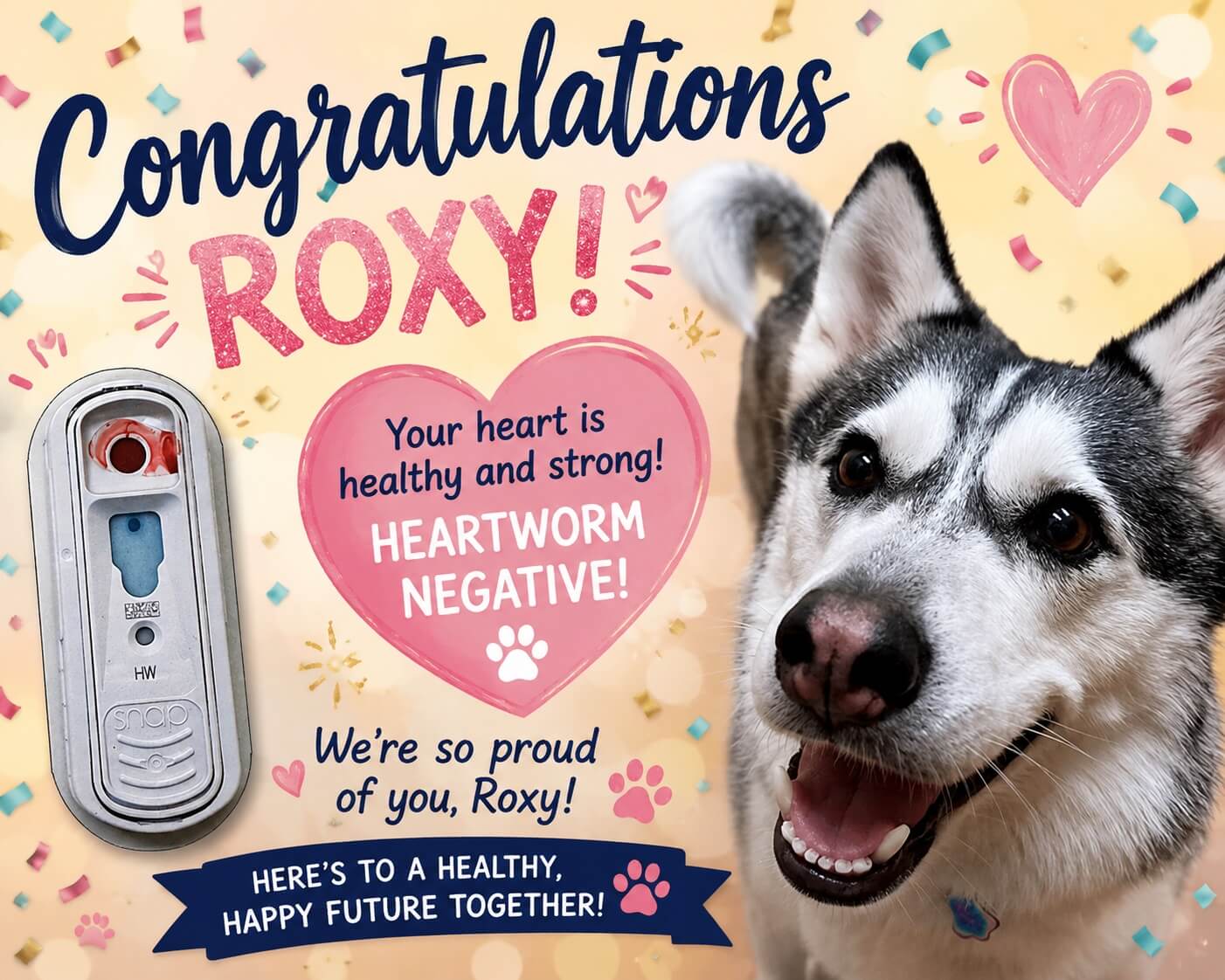
She continued receiving heartworm prevention and returned in July 2026 for her annual examination and follow-up heartworm test. By then, Roxy’s family reported that she was feeling much better than she had the previous year. She was not coughing, her heart and lungs sounded normal, and her heartworm test was negative, confirming successful treatment.
Today, Roxy is doing wonderfully—and we are thrilled to celebrate her heartworm-free result!
Why Heartworm Prevention Is So Important
Roxy’s treatment was successful, but it required months of medications, multiple hospital visits, three Diroban injections, repeated testing, and a prolonged period of strict activity restriction.
Preventing heartworm disease is far easier and safer than treating an established infection. Heartworm prevention must be given consistently and year-round. Depending on the patient and family’s preferences, prevention may include a monthly oral medication or a longer-lasting injectable option.
Missing or delaying even one monthly dose can create a gap in protection. Dogs may also spit out or vomit a medication without their family realizing it. For these reasons, the American Heartworm Society recommends year-round prevention for dogs.
Why Test Every Year if My Dog Takes Prevention?
Annual testing is still important—even for dogs receiving heartworm prevention.
Preventives are highly effective, but no prevention plan is completely immune to missed doses, administration problems, or unexpected failures. Without routine testing, an infection could remain unnoticed while heartworms continue damaging the lungs and cardiovascular system.
The American Heartworm Society recommends annual heartworm screening to confirm that a dog’s prevention program is working. Current guidance also recommends testing for circulating microfilariae along with heartworm antigen screening.
Roxy is a perfect example of why this matters. She did not arrive coughing or struggling to breathe. Her infection was discovered because she was tested. That allowed treatment to begin before she developed obvious signs of advanced disease.
Roxy’s Message to Other Dogs
Heartworm disease is serious, but it is also preventable.
Keep your dog on veterinarian-recommended heartworm prevention throughout the entire year, and do not skip the annual heartworm test—even when every preventive dose appears to have been given correctly. Routine screening gives us the best opportunity to identify an infection before significant symptoms develop and to begin treatment as safely as possible.
Congratulations, Roxy, on completing your treatment and becoming heartworm negative! Your journey is an important reminder that prevention protects, testing detects, and early action can save lives.
Have Questions About Heartworm Disease?
Protecting your pet from heartworm disease starts with prevention and routine testing. If you have questions about heartworm disease, prevention, or testing, our team is here to help.
📞 Call us: (254) 935-3693
Whether you have questions about prevention, need to schedule a heartworm test, or simply want to learn more, we’re here for you and your pet. Contact us today, and a member of our team will get back to you as quickly as possible.